Victoria Baroque
Victoria Baroque presents dynamic, personal, and engaging performances of music from the Baroque and Classical periods on historical instruments.
Browse concerts →
Bringing Baroque music to life, Victoria Baroque inspires Vancouver Island audiences through initmate live performances.
Victoria Baroque brings together early music specialists from Vancouver Island and beyond for explorations of chamber, orchestral, vocal, and choral works. Playing on instruments of the eighteenth century, Victoria Baroque brings audiences closer to the sound world of that period, embracing the dance-driven rhythmic vitality, as well as the lyrical and conversational aspects of baroque music. The ensemble also commissions and presents new Canadian music written for historical instruments.
Besides self-presented concerts, Victoria Baroque has performed as guest artists for Early Music Vancouver, Early Music Society of the Islands, Artspring, and the Cowichan Symphony Society. Outreach and education are integral to Victoria Baroque’s mission, and its educational initiatives have included community workshops and collaborations with the Victoria Conservatory of Music, University of Victoria School of Music, and the Greater Victoria Youth Orchestra.
The musicians
The players at the heart of Victoria Baroque. Select a musician to read their biography.
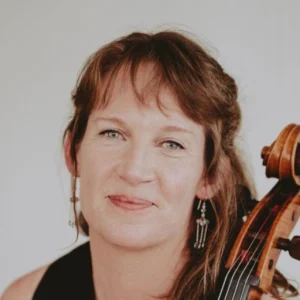
Amy Laing
Cello
Originally from Nanaimo B.C. cellist Amy Laing earned her Bachelor of Music degree from the HARID Conservatory in Boca Raton Florida, and her Master of Music degree from the Cleveland Institute of Music.
Prior to the arrival of COVID, Amy was delighted to be in her first season as Principal cellist in the Hamilton Philharmonic Orchestra. She played regularly with the Toronto Symphony Orchestra, as well as with the National Arts Centre Orchestra, the Canadian Opera Company, the Windsor Symphony, Niagara Symphony, Thunder Bay Symphony, and also held a six-month contract with Symphony Nova Scotia in Halifax.
In 2011/12 Amy served as acting principal cello in the Victoria Symphony and taught at the Victoria Conservatory of Music and again joined the orchestra playing principal cello for the second part of their 2016 season.
Amy is now happy to call Vancouver Island home once again and is thrilled to play with Victoria Baroque. Amy plays on a Jean-Baptiste Vuillaume cello.
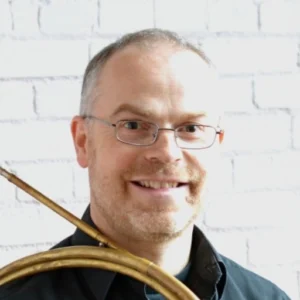
Andrew Clark
Natural Horn · Founding Member, Victoria Baroque
Andrew Clark has been blowing down pieces of metal tube ever since he first emptied his grandmother’s kitchen cupboard and found a funnel before the age of two. A graduate of the Guildhall School of Music and Drama, studying with horn professors Halstead, Chidell and Bryant, he performed with many orchestras and ensembles using both period instruments and their modern counterparts. Highlights of his career include many years of playing principal horn in London Classical Players (Norrington); Orchestra of the Age of Enlightenment; Academy of Ancient Music (Hogwood); English Concert (Pinnock); and Amsterdam Baroque Orchestra (Koopman) with whom he recorded Bach’s Cantatas.
As a soloist he has made several commercial recordings: concertos by Vivaldi, Fasch and Crusell; works for horn and piano by Beethoven and Czerny; the Brahms Horn Trio, Mozart’s Horn Quintet, Beethoven’s Sextet and the Sonata da Caccia by Thomas Ades. He was also a horn teacher at London’s Royal Academy of Music for seventeen years and at the Guildhall School of Music and Drama for ten years. He has performed in forty countries, but is now attempting to tour less often to reduce his carbon foot-print.
In 2010 Andrew moved from England with his wife, bassoonist Katrina Russell, to Vancouver Island. He has set up a horn making workshop there, building customized instruments for himself and for colleagues around the world. Since 2011 he has played principal horn with the Vancouver Island Symphony Orchestra.
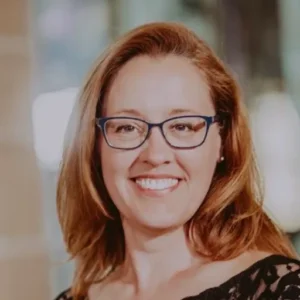
Christi Meyers
Violin · Founding Member, Victoria Baroque
An accomplished performer on both modern and baroque violin, Christi Meyers has played a prominent role in the musical life of Victoria for more than 20 years. She has been Assistant Concertmaster of the Victoria Symphony since 2001 and has appeared frequently as soloist with the orchestra, most recently playing Vivaldi’s Four Seasons and Bach’s Brandenburg Concertos Nos. 2 & 5.
She is a founding member of the period performance ensemble, Victoria Baroque, is a member of Vancouver’s Pacific Baroque Orchestra, and annually plays in chamber music concerts for Early Music Vancouver. She has also been the first violinist of the Odyssey String Quartet since its inception in 2002.
In 2011, while on sabbatical in the Netherlands, she was Assistant Concertmaster of Sinfonia Rotterdam (NL) and a member of European Camerata (UK). Over the past 3 decades Christi has played in major halls all over Canada, and in Australia, Japan, New Zealand, France, the Netherlands, Britain, Columbia, Mexico, and the USA. She has shared the stage with artists ranging from Michael Buble to Pavarotti to Yo-Yo Ma.
A dedicated educator, she has been on faculty at the University of Victoria, the Victoria Conservatory of Music, and had a long association with the Greater Victoria Youth Orchestra as a violin coach.
In 2021 she became the Artistic Director of Township Classics, an Esquimalt based chamber music concert series that funds the Youth Mentorship Program, an initiative providing scholarships, mentoring, and concert opportunities for talented musical teens from the public school system in the greater Victoria area.
Born in Montreal and raised in northern Alberta, Christi holds music performance degrees from McGill and Western Universities, under the tutelage of Gwen Thompson-Robinow and Sonia Jelinkova.
She is married to a great guy and is the mom of two young adults and one ginger cat with attitude.
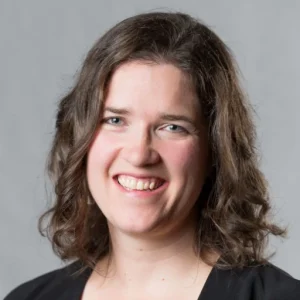
Christina Hutten
Organ, Harpsichord · Artistic Director, Victoria Baroque
Organist and harpsichordist Christina Hutten is the artistic director of Victoria Baroque and of the Summer Intensive Program in Baroque Music hosted by the Victoria Conservatory of Music. Christina is a passionate teacher, who believes that the study of early music provides rich opportunities to nurture curiosity and to develop a wide variety of musical skills. She coordinates the early music ensembles at the University of British Columbia and teaches at a variety of workshops, including the Canadian Renaissance Music Summer Schools.
Christina has presented recitals in Canada, the United States, and Europe. She performs regularly with Pacific Baroque Orchestra, the Victoria Symphony and on the series of Early Music Vancouver. She has appeared as concerto soloist with the Vetta Chamber Ensemble and the Okanagan Symphony. Funded by a generous grant from the Canada Council for the Arts, she pursued private organ studies in Europe, studying with François Espinasse, Bernard Winsemius and Francesco Cera. Christina obtained a Master’s Degree in Organ Performance from Arizona State University under Kimberly Marshall and an Advanced Certificate in Harpsichord Performance from the University of Toronto under Charlotte Nediger.
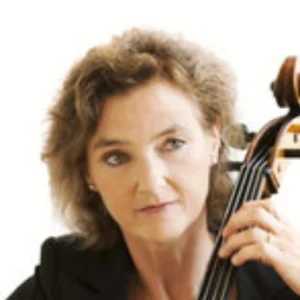
Christina Mahler
Cello
Dutch cellist Christina Mahler immigrated to Canada in 1981 to serve as principal cellist of the Tafelmusik Orchestra, a position she held until June of 2019. Reviews often praise her rich sound, energetic playing, and insightful musicianship. Christina has played and recorded numerous concertos with Tafelmusik, including works by Boccherini, Haydn, Vivaldi, C.P.E. Bach, and Leonardo Leo. She is very fortunate to own a beautiful baroque cello made by José Contreras, the “Stradivarius” of Spain.
Christina is a very devoted and gifted teacher, and students have come from around the world to study with her, not only through the Tafelmusik Summer and Winter Institutes, but also at the University of Toronto and in her private studio. After 38 years as principal cellist of Tafelmusik, Christina has moved to Victoria where she is focusing on chamber music, teaching and pursuing her hobbies, such as pottery.
Photo: Sian Richards
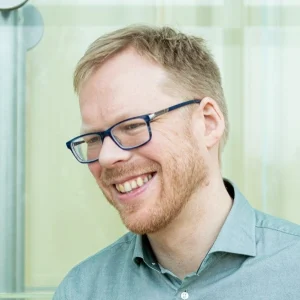
Diederik van Dijk
Cello
Diederik van Dijk is a Dutch-Canadian cellist with a broad range of musical activities and interests who is equally at home on the Baroque and the modern cello. With a practice spanning four centuries of music history and crossing over into various genres, he divides his time mostly between chamber music and orchestral playing. His musical adventures have taken him from the Amsterdam Concertgebouw to outdoor stages in Newfoundland; from performing internationally at major Early Music festivals to recording in Abbey Road Studios.
Diederik studied cello with Ian Hampton, Eric Wilson, and Marc Destrubé, and Baroque cello with Viola de Hoog, acquiring in the process a Bachelor of Arts from the University of British Columbia and a Bachelor of Historical Instruments from the Utrecht Conservatory. He is a core member of Combattimento and Trio da Fusignano and for years also of the Van Swieten Society, and inter-arts ensemble Dark by Five. Frequently engaged as principal cellist with the Nieuwe Philharmonie Utrecht and the Pacific Baroque Orchestra, in recent years Diederik has also performed with the Orchestra of the 18th Century, Amsterdam Baroque Orchestra, the Metropole Orkest, Insomnio, and in the productions of Holland Opera. Every day he is grateful to be able to share the joys of music making with his colleagues, his students and audiences alike.
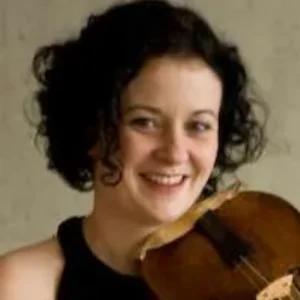
Elyssa Lefurgey-Smith
Violin · Founder, Cowichan String Academy
Versatile Canadian violinist Elyssa Lefurgey-Smith grew up in Nanaimo, BC. She began her violin studies at age 5 with an inspiring teacher which led her to a career as a professional violinist. In over a decade of performing with many Toronto ensembles, Elyssa most cherished her time with Tafelmusik Baroque Orchestra, which inspired her to pursue a specialty in early music. In 2016, Elyssa returned to her island roots and settled in Victoria to be closer to family. Excited to pursue new opportunities, she was warmly welcomed by her west coast colleagues and now holds permanent positions in local early music ensembles Victoria Baroque and Pacific Baroque Orchestra (Vancouver).
In addition to performing, Elyssa is an enthusiastic and passionate educator and has been involved in teaching, coaching and program development for over 20 years. Elyssa has been on faculty at the Victoria Baroque Summer Academy since its inception in 2016 and has been invited as a guest coach to the Collegium Ensemble at the University of Victoria.
In 2018, Elyssa became the coordinator of the Junior Summer String Academy at the Victoria Conservatory of Music and in 2022, founded the Victoria Baroque Youth Orchestra. Most recently, Elyssa moved to the Cowichan Valley and founded a new studio, the Cowichan String Academy.
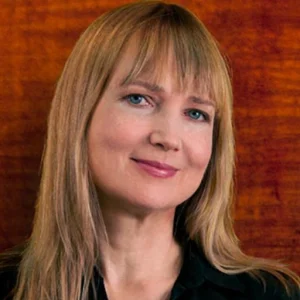
Joanna Hood
Viola · Founding Member, Lafayette String Quartet
Violist, Joanna Hood is an avid chamber music player both in modern and period styles. She is a founding member of the Lafayette String Quartet, formed in 1986 and based at the University of Victoria. She is the violist of the Historically informed performance groups, The Loma Mar Quartet, founded in 1997 and the DNA Quintet formed in 2008, both based in New York. Their first recording of the newly discovered chamber works of Domenico Dragonetti won the prestigious Classical Recording Foundation Award in 2009.
Joanna has performed with the Orchestra of St. Luke’s, Victoria Baroque Players, Early Music Vancouver, Seattle and Pacific Baroque Orchestras, Pacific Music Works, Oregon Bach Festival, and The Serenade Orchestra.
Hood was a student of Isadore Tinkleman, Abraham Skernick and baroque violinist Stanley Ritchie.
She plays on a viola labeled Johan Samuel Fritsche, 1805, and a viola by Edmond Aireton, 1754.
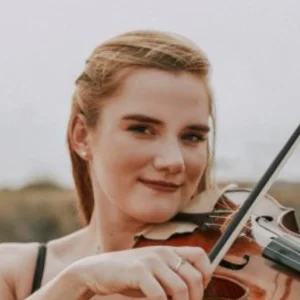
Kathryn Wiebe
Violin
Originally from Windsor, Ontario, Kathryn is an active & versatile freelance violinist and educator on Vancouver Island. Her passionate and intuitive musicianship has brought her the opportunity to perform with distinguished ensembles around Canada and the USA, including Victoria Symphony, Pacific Baroque Orchestra, Victoria Baroque Players, Windsor Symphony Orchestra, Orchestra London.
After much success in local musical competitions, she furthered her study and love of music at University of Toronto and University of Michigan under the instruction of Yehonatan Berick as a merit scholar. During this time, She served as concertmaster in University of Toronto Symphony Orchestra, and began her training in historical performance practice.
Over the years, she has brought her talent various training institutes, including the Berwick Academy at the Oregon Bach Festival, Brott Music Festival, Tafelmusik Baroque Summer Institute, Domaine Forget, and Interlochen Centre for the Arts.
Currently, she is the founder, creative director, and avid arranger of Cascadia Quartet & ensembles, and has been hired as arranger for a number of artistic projects all over Canada, including an opera that was performed at the Edinburgh Fringe Festival. As an educator, Kathryn is a private, group, & orchestral ensemble instructor to budding young violinists and pianists as young as three years old, up to all ages. She is an instructor at Taber Music School, Kwum Kwum Lelum at Songhees First Nations Reserve, Sooke Harmony Project, and the Sooke String Orchestra. She is eager to show students the joy of music through nurturing musicianship in each of them. Kathryn is especially thankful for the numerous mentors and teachers that have helped nuture her craft, both in modern and baroque violin, including Lillian Scheirich, The Pacifica Quartet, Katheryn Votapek, The Gryphon Trio, Jeanne Lamon, Marc Destrubé, & Robert Mealy, to name a few.
Photo: Emily Beekmans Photography
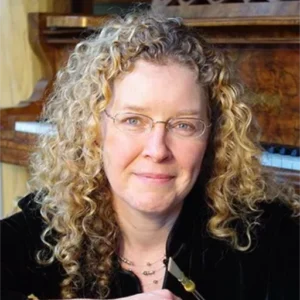
Katrina Russell
Bassoon · Founding Member, Victoria Baroque
Born and raised in Edmonton, Katrina Russell obtained her Bachelor of Music Degree in Performance from The University of Victoria. Further studies took her to Toronto, Banff, and then to Boston Massachusetts where she attended the New England Conservatory of Music. There she was able to pursue her interest in the Baroque bassoon, and was granted a Graduate Diploma Historical Performance with distinction in performance.
Armed only with a handful of bassoons and a desire to play them, Katrina moved to London, England where she was lucky enough to spend eighteen years playing them (as well as several others that presented themselves along the way). Specializing in historical performance, she played and recorded with many of the period instrument ensembles in Britain and Europe, including The English Concert, The King’s Consort, The Orchestra of the Age of Enlightenment, The Academy of Ancient Music, The Hanover Band, The Gabrieli Consort and Players, L’Orchestre de la Champs Elysees, The Orchestra of “The Sixteen”, and The Amsterdam Baroque Orchestra.
After several years of return visits to Canada to play with Early Music Vancouver ensembles and The Pacific Baroque Orchestra, Katrina and her husband (British horn player Andrew Clark) relocated to the West Coast in late 2010, and established themselves near Ladysmith where they have a speciality brass making workshop producing horns and trumpets.
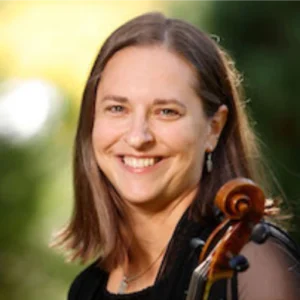
Mieka Michaux
Viola, Violin · Victoria Baroque
Originally from Victoria, B.C. Mieka Michaux enjoys an active career as an orchestral and chamber musician performing on both modern and baroque viola and violin.
She completed a Bachelor of Music degree in 1998 and, in 200, obtained a Master of Music at Rice University in Houston, Texas. She has studied and performed at the Music Academy of the West, the Banff Center for the Arts, Orford Center for the Arts and the National Youth Orchestra of Canada. Currently, Mieka is a member of the Victoria Symphony and since 2010 she regularly performs with the Pacific Baroque Orchestra. She is also a founding member of the Victoria Baroque Players.
In 2006, along with three colleagues from the Victoria Symphony, she co-founded the Emily Carr String Quartet. The quartet’s debut CD Hidden Treasure was nominated for Classical Recording of the Year by the Western Canadian Music Awards.
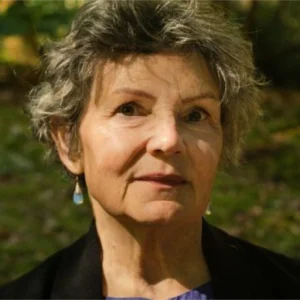
Natalie Mackie
Violone, Viola da gamba
Natalie Mackie studied cello at the Conservatoire de Musique (Québec), followed by a degree from the School of Music, University of British Columbia. While at UBC she was introduced to the viola da gamba, and following graduation, she pursued further studies at the Koninklijk Conservatorium in The Hague.
Natalie has played with many ensembles in Canada and the US, including New World Consort, Les Coucous Bénévoles, Tafelmusik, Portland, and Seattle Baroque Orchestras, Les Voix Humaines, Tempo Rubato, Les Voix Baroque, Oregon Bach Festival Orchestra, Victoria Baroque, and Vancouver Intercultural Orchestra among others.
Natalie is a member of Pacific Baroque Orchestra and the chamber ensemble “La Modestine”- both Vancouver-based ensembles. She has toured throughout Canada, Europe, and the US and recorded for Radio France, German Radio, BBC, CBC, and NPR, as well as the Canadian label Atma Classique.
Natalie is a regular performer in the Pacific Baroque Festival, held annually in Victoria, BC, and teaches in the Baroque Orchestra Mentorship Program at the University of British Columbia.
Photo: Laina Tanahara
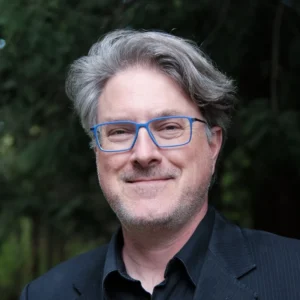
Paul Luchkow
Violin, Viola · Concertmaster, Rosa Barocca
Paul Luchkow is a versatile violinist and violist whose activities cover the range of music from the 17th Century to the present day, on modern and period instruments. A regular feature of Western Canada’s Early Music scene, Paul is a long-time member of the Pacific Baroque Orchestra and appears frequently in concerts for Early Music Vancouver. At home on Vancouver Island, he performs regularly with Victoria Baroque, Victoria Symphony, the Early Music Society of the Islands, as well as at Victoria’s Pacific Baroque Festival. Away from home, he is the concertmaster of Alberta’s new Baroque orchestra: Rosa Barocca.
A highlight of recent years had been his work with fortepianist Michael Jarvis and their exploration of Classical and Romantic sonata repertoire on period instruments. Their latest recording – Trios for violin, viola da gamba, and fortepiano by Tommaso Giordani with the British gambist, Sam Stadlen, was released on the Marquis Classics label in the Fall of 2020.
As a recording engineer for 15 years Paul has made concert and CD recordings for many of the important small and medium sized ensembles on Canada’s west coast and, in the past years he has been working closely with organizations like Music for the Pause, The Victoria Symphony, and Pacific Opera Victoria, recording for their numerous online offerings.
Photo: Danielle Acken
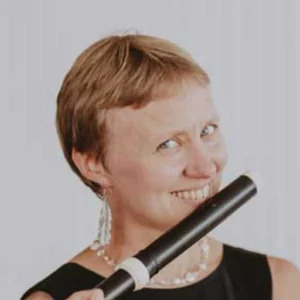
Soile Stratkauskas
Flute · Victoria Baroque
Finnish-born Soile Stratkauskas moved to Victoria, BC, in 2010 and has since established herself as the leading baroque flutist on the Canadian West Coast.
She regularly performs at the Victoria Baroque, Pacific Baroque Orchestra, and Pacific Baroque Festival concerts as soloist, chamber, and orchestral musician.
Soile completed her undergraduate studies at the Royal Northern College of Music in Manchester, and gained her Master’s degree at the Royal Academy of Music in London, UK, where she studied early flutes with Lisa Bezonsiuk.
Soile has performed with many prominent period instrument orchestras in the UK, including the Orchestra of the Age of Enlightenment and the Gabrieli Consort and Players, and has toured in Europe with these groups.
With her chamber ensemble ‘Four Temperaments’ she has performed at the London Handel Festival, Saintes Festival in France and Musica Antiqua in Barcelona.
Soile is the Founder and former Artistic Director of the Victoria Baroque, and is passionate about creating opportunities for music making in the community. She teaches baroque flute at the University of British Columbia as part of Early Music Vancouver’s Baroque Orchestra Mentorship Programme.
Photo: Danielle Acken
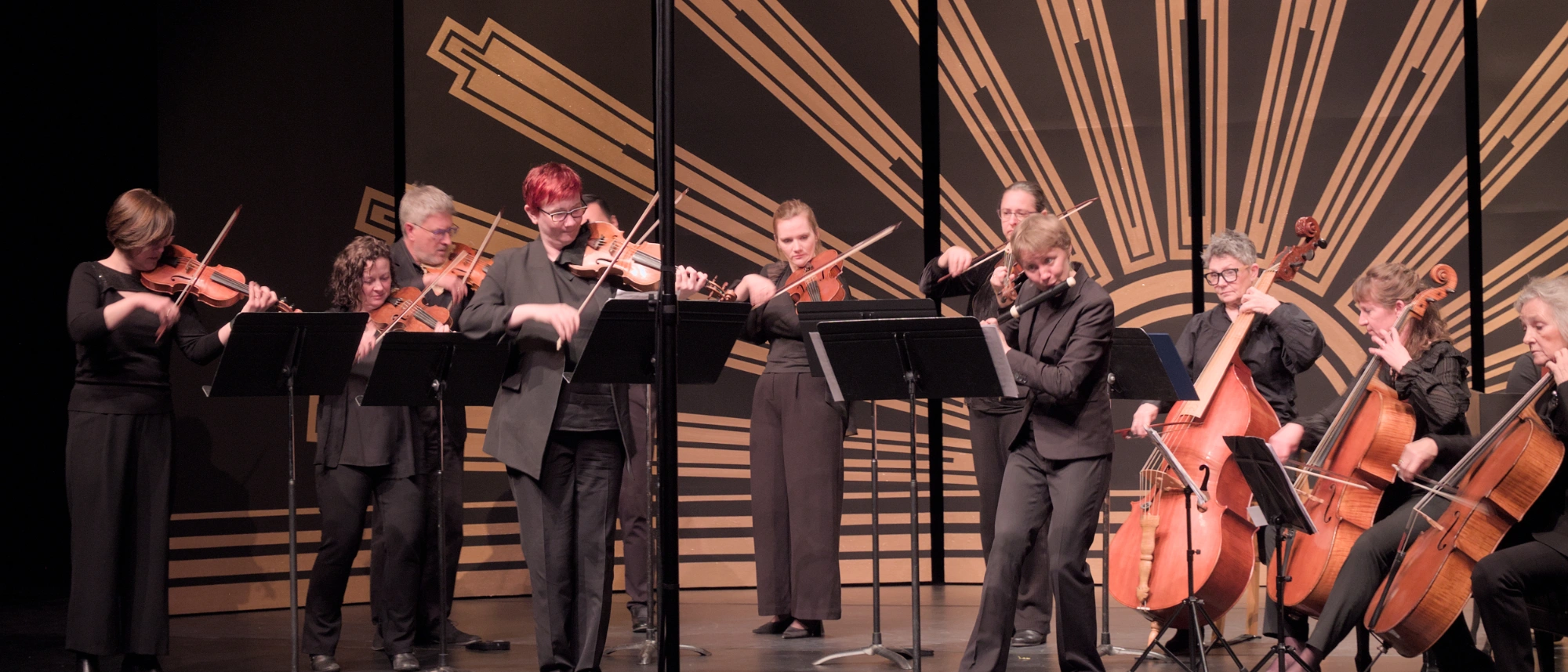
Learn about the instruments of the 18th century
Baroque instruments are designed for conversation. Their tone is mellower than their modern equivalents, and their set up allows for nuances of articulation, intonation, and colour that reflect the qualities of the voice, humanity’s most integral and intimate musical tool.
Select an instrument to read more about gut strings, shorter and tapered bows, mellifluous wooden flutes, oboes and bassoons with fewer keys, and natural horns without valves.
The instruments
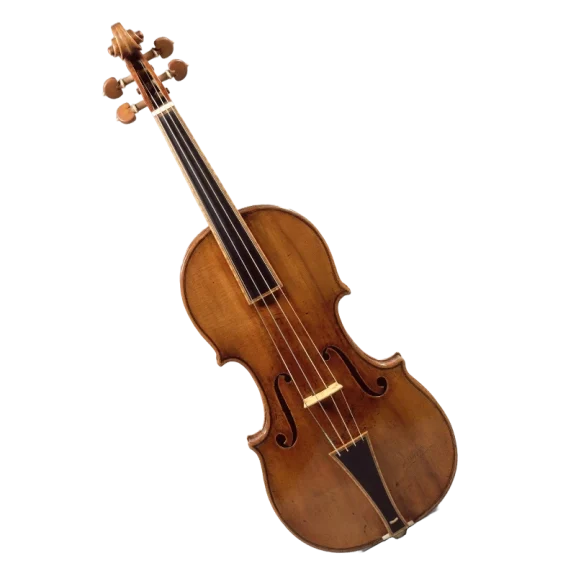
Violin
The violin family is comprised of instruments of various sizes and pitch ranges, including the violin, viola, and violoncello, but also lesser-known instruments like the piccolo violin and piccolo cello and others. Construction of violin family instruments was carefully honed in the seventeenth and eighteenth centuries, and some of the world’s most famous instruments were built in that era by craftspeople from the Stradivarius, Guarneri, and Amati families. Until the twentieth century, the most common material used for instrument strings was catgut, a cord made from sheep intestines. Gut strings have a warm and complex tone and respond differently to the bow in ways that allow for more articulate playing.
The baroque bow is shaped more like its namesake, the archery bow, with a slight convex curve, and a pointed tip. Compared to the modern bow that is designed to seamlessly sustain sound, the baroque bow naturally creates stronger down-bows and lighter up-bows perfect for conveying inflection in musical meter or mimicking strong and weak syllables of speech.
Some of Victoria Baroque’s musicians play on antique instruments, including Joanna Hood, who plays on a viola labeled Johan Samuel Fritsche 1805 and a viola by Edmond Aireton 1754, and Christina Mahler, who plays a baroque cello by José Contreras, the “Stradivarius” of Spain. Other musicians play replicas by fine instrument builders of the present day.
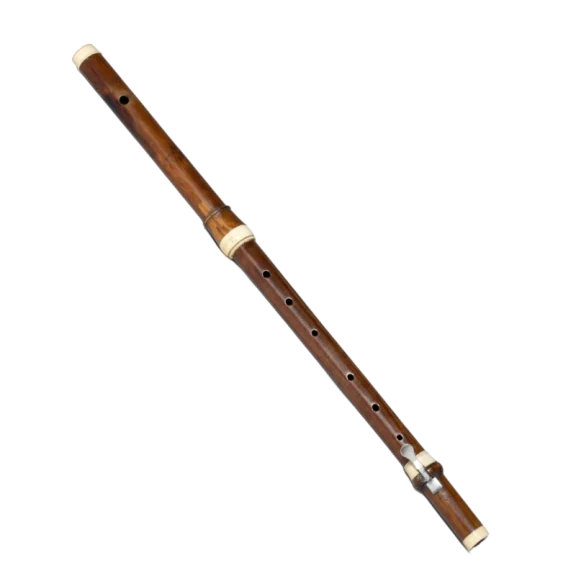
Baroque flute
Also known as the “traverso” the baroque flute was developed at the French court near the end of the seventeenth century. Unlike earlier transverse flutes, the baroque flute is made of several sections and has a slightly conical bore (internal space) that helps with tuning. Like other baroque woodwinds, it has mainly open holes for the fingers and only a few keys. It is usually made of wood, giving is a very mellow, supple tone. Unlike the modern flute, the baroque flute is not timbrally uniform across its whole range. Different tonalities sound different from one another. Some, like D Major, have a bright and open quality, while others, like F minor, sound dark and covered.
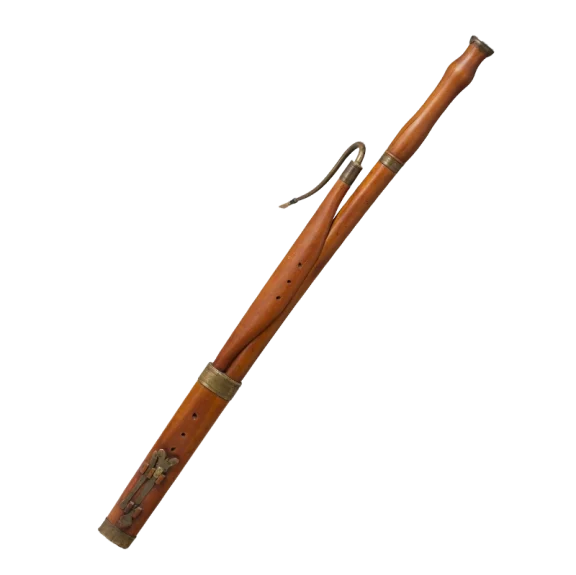
Bassoon
The bassoon is a double-reed instrument that plays in the tenor and bass ranges. In many European languages, it is called some variant of “fagotto”, an evocative reference to its appearance. It looks rather like a bundle of sticks.
The bassoon changed considerably over the course of the seventeenth and eighteenth centuries, starting out as an instrument called the dulcian, which was carved from a single piece of wood. Like the other baroque woodwinds, the bassoon received considerable engineering at the French court, where it became an instrument built from several sections fitted together, with a larger pitch range, better tuning capabilities, and more capacity for virtuosic playing.
The baroque bassoon gives excellent definition to the bass line, the structural foundation of baroque music. As a solo instrument in arias, it is often selected to represent the other-worldly.
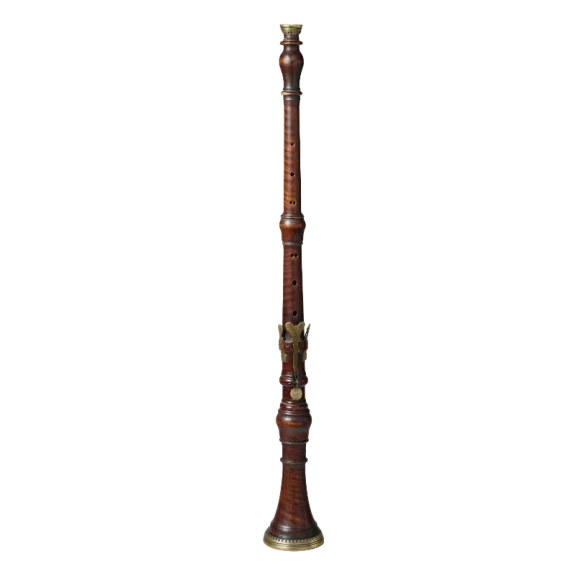
Oboe
The baroque oboe has a wonderfully plaintive, expressive sound. It is a double reed instrument like its modern counterpart, but looks more like a recorder, with mostly open holes for the fingers and only a few keys at the bottom of the instrument. The baroque oboe has a larger bore (internal space where the wind passes through) than a modern oboe and is played with a somewhat shorter, wider reed, these features give it its warm tone and lyrical flexibility.
The most familiar baroque oboe plays in approximately the same register as the violin, but oboes were sometimes played in bands including instruments of various sizes like the “taille” or tenor oboe. In Leipzig, where Bach was working, a musical instrument builder experimenting with attaching a larger bell (like the bell of a brass instrument) to the end of an oboe, creating the “oboe da caccia” which was a particular favourite of Bach’s.
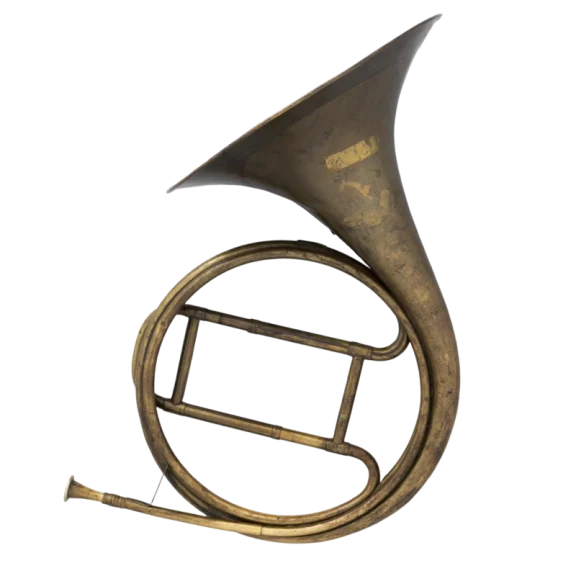
Natural Horn
The natural horn descended from the hunting horn, used for signalling in outdoor spaces. In eighteenth century, orchestral music, the presence of the horn often evokes the pleasure of the outdoors.
The natural horn basically consists of a mouth-piece, a curved length of tubing (the length of which can be adjusted with pieces of tubing called crooks), and a flared bell. In order to play chromatically, the player must use a combination of the correct crooking (length of tubing), modification of the embouchure (mouth and face), and hand-stopping (adjusting the placement of the player’s hand in the bell of the instrument). All of these adjustments make the timbre of the horn quite variable across its range, a feature that composers of the eighteenth century exploited in their music.
Victoria Baroque musicians Andrew Clark and Katrina Russell build natural horns and trumpets in their workshop in Ladysmith.
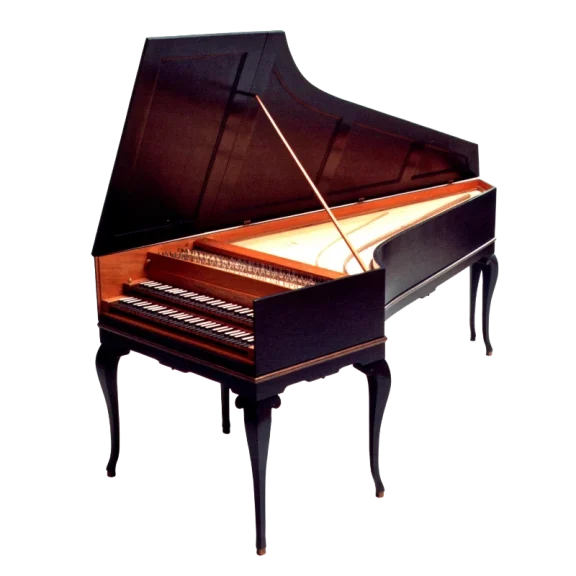
Harpsichord
The harpsichord might be described as a keyed harp or guitar. It has metal strings (brass and/or iron), and a relatively simple mechanism by which the key levers push plectra (like guitar picks) past the strings. Instruments using this basic design originated in the Middle Ages and remained widely in use into the late eighteenth century, when the rapidly developing piano began to dominate.
Within an ensemble, the harpsichord functions as the rhythmic engine, giving definition to the beat structure and helping with ensemble cohesion. As a solo instrument, the harpsichord shines brightest in a moderately sized room in which its rich resonance and nuance can be fully appreciated.
Victoria Baroque’s main harpsichords are a tiny single-manual (keyboard) harpsichord modeled on sixteenth-century Italian harpsichords, built by British builder Colin Booth; and a large double-manual harpsichord modeled on a 1774 instrument by Johann Heinrich Gräbner, built by Yves Beaupré in Montreal.
Collaborators
Victoria Baroque enjoys ongoing collaborations with many local ensembles and visiting guest artists.
Featured Guest Soloists 2026/27
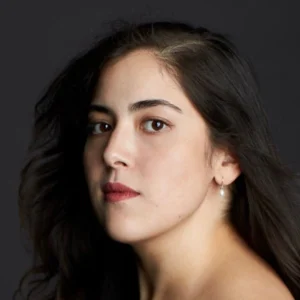
Ai Horton
Soprano
Currently based in The Netherlands, Canadian-Japanese soprano Ai Horton is praised for her vulnerability and versatility as a creative. With a particular interest in historical-performance practice, her varied concert repertoire spans several centuries and includes 17th-century Italian monody, music of the high French Baroque, the works of J.S. Bach, and German Lieder of the Romantic era.
Last summer, she returned to the operatic stage as “El Aire” in Antonio Literes’ Los Elementos with Jeune Orchestre Baroque Européen. Ai also regularly performers contemporary works and recently premiered Australian-composer Lydia Gardiner’s “Zeewijk Passion” at Het Scheepvaartmuseum Amsterdam (The Maritime Museum). Other professional highlights include Handel’s “Messiah” with Bach on the Rock (CAN), joining Early Music Vancouver for their summer festival “Women in Sight” as a 2023 Next-Generation Artist (CAN), Buxtehude’s “Membra Jesu Nostri” with Dutch Baroque (NL), Rameau’s “Quam Dilecta Tabernacula” broadcast on Radio West (NL), and a concert of Telemann solo cantatas with violinist Marc Destrubé (CAN).
An avid supporter of civic engagement initiatives, Ai aims to create community and belonging through shared musical experience as both a performer and an educator. She has put together several projects that bridge her personal experiences with the music that she loves, in an effort to create a deeper connection between her artistic work and new audiences who can connect to the stories and sentiments shared. Her current project—”Nao-Chan”—follows the life’s journey of Ai’s grandmother, Naoko Fujita (藤田尚子), who left Japan when she was 21-years old to start a new life in North America. This cross-continental journey is presented as a collection of letters written to her childhood friend Yoshiko, woven together with 19th/-20th-century Japanese art songs. Filled with stories of resilience and charming glimpses into the everyday lives of Naoko, her husband Takashi, and their three children, the production captures the anxieties of facing the unknown, the strength of human-spirit, and the cyclical nature of life through the lives of a family of immigrants.
Ai completed a Masters in Early Music Vocal Studies as a Holland/Excellence Scholar at the Royal Conservatoire The Hague, researching the pathetic capabilities of 17th-century laments. She also holds a Bachelor of Music in Secondary Music Education and Voice from the University of Victoria. An experienced and in-demand chorister, she can regularly be seen singing with top Dutch vocal ensembles.
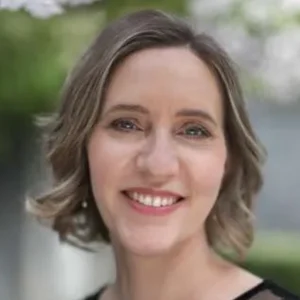
Chloe Meyers
Violin · Concertmaster, Pacific Baroque Orchestra
Violinist Chloe Meyers performs with early music ensembles across North America as leader, orchestra member, and chamber musician.
She is the concertmaster of the Pacific Baroque Orchestra in Vancouver and co-concertmaster of Arion Baroque Orchestra in Montreal. She has led or appeared as soloist with groups including the Victoria Baroque Players, Pacific MusicWorks, Ensemble Les Boréades, the Theatre of Early Music, Ensemble Masques, and Les Voix Baroques, of which she was a founding member. She has had the pleasure of sharing the stage with international violin stars, performing double concerti with Stefano Montanari, Enrico Onofri, Amandine Beyer, and Cecilia Bernardini. Chloe’s playing may be heard on many award-winning disks, including the 2022 Juno award winning recording “Solfeggio”… in which she leads the orchestra L’Harmonie des Saisons as concertmaster. In 2023 she was nominated as Best Musical Director for her work in Pergolesi’s Stabat Mater with the Edmonton Opera.
Alongside Chloe’s passion for performance and directing, is her love of teaching. As adjunct professor at the University of British Columbia, she trains young artists in the Baroque Orchestra Mentorship Program, chamber music and solo lessons. She has years of teaching children, university and students of all ages and levels! She is an active teacher in the summer Victoria Conservatory teaching programs, as well the UVic Collegium orchestral program.
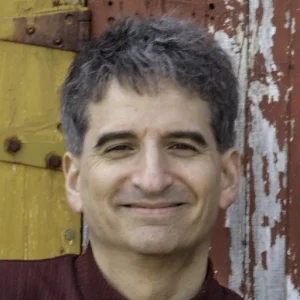
David Greenberg
Violin
For over three decades, David has enjoyed a double career as a Baroque violinist and Cape Breton fiddler. His fluency and experience in these two genres makes him uniquely qualified to interpret the wild music of 18th-century Scotland. David is a graduate of Indiana University’s Early Music Institute, where he studied with Stanley Ritchie. He has performed, taught, and recorded primarily in North America and Western Europe, as well as in Australia, New Zealand, and the Far East.
David has performed with Tafelmusik, Red Priest, Les Musiciens de Saint-Julien, Concerto Caledonia, Apollo’s Fire, Ensemble Caprice, La Nef, Toronto Consort, Seattle Baroque, Les Voix Humaines, Chris Norman, Suzie LeBlanc, Doug MacPhee, and Musica Pacifica. He has performed as guest soloist/director with several orchestras, including the Calgary Symphony Orchestra and Symphony Nova Scotia. He has recorded over 80 CDs, including with most of these ensembles and collaborators, as well as three groundbreaking Scottish-Cape Breton-Baroque recordings with his own ensemble Puirt A Baroque in the 1990s.
David co-authored The DunGreen Collection (1996), an influential treatise on Cape Breton fiddling. He is also a composer and arranger. Many of his tunes have been recorded by Cape Breton musicians such as Buddy MacMaster, Carl MacKenzie, Jerry Holland, and The Rankins. David enjoys sharing his passion and knowledge about Baroque and Cape Breton music in workshop settings, including his online courses and monthly in-person & streamed Hobbit House CB teaching sessions. His current solo touring program is called Multiple Voices for One (also the name of his new recording, released on Dec 2, 2022).
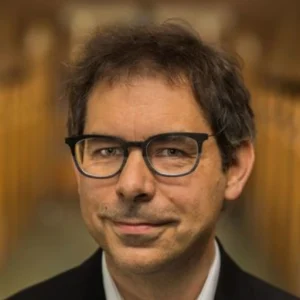
David Stratkauskas
Conductor · Founding Member, Baroque Victoria
David Stratkauskas is a native of Vancouver and completed his MA in Music Theory at UBC working under noted theorist Dr William Benjamin.
Afterwards, he was active as an organist and choir director, pianist, accompanist, and conductor, in Vancouver and London, UK. He returned to Canada in 2010 to help build a vibrant music programme at St John the Divine, Victoria, with several choirs and a thriving Choral and Organ Scholarship programme.
He has directed the St John’s Chamber Singers and the Victoria Baroque Players in numerous performances of great Baroque works, and is the director of Vox Humana Chamber Choir, which specialises in newer compositions and is well-known for its annual ‘Vox in the Stars’ concerts at the Dominion Astrophysical Observatory.
David has also worked with the Victoria Children’s Choir since 2011, including as Artistic Director and conductor of the Concert Choir and Youth Choir divisions from 2021 until 2026.
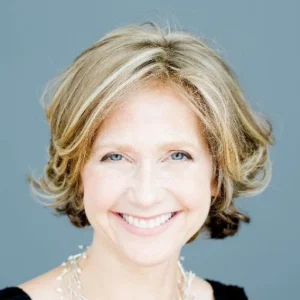
Suzie LeBlanc
Soprano
Internationally renowned Acadian soprano Suzie LeBlanc’s singing career includes performances and widely acclaimed recordings with keyboardists, chamber ensembles and orchestras in new, early and traditional repertoires. She received the Order of Canada (2015) and four honorary doctorates for her prolific performances of early music, as well as for her contribution to Acadian culture. In 2021, she was the recipient of the Prix Éloize for the most distinguished artist outside Acadia. She commissioned eleven Canadian compositions set to the poetry of Pulitzer-Prize recipient Elizabeth Bishop and recorded them on the album “I am in need of music” which won an ECMA for Best Classical Recording.
Ms. LeBlanc began her career as a well-known performer and scholar of Baroque repertoire. Residing in Europe between 1987 and 1999, she performed on main stages such as Het Concertgebouw, De Nederlandse Opera, The Vienna Konzerthaus,Wigmore Hall and the Proms in London. She toured Asia, Australia, Canada, Europe, the US and South America with world leading early music ensembles. In 1998, she was invited to perform for the former president of Czechoslovakia, Václav Havel, at the Canadian Embassy in Prague. Returning to Montreal in the year 2000, she performed with major symphony orchestras on both sides of the border. In 2005, she founded Le Nouvel Opéra, a Montreal-based company that produces baroque opera and contemporary works. Three of Le Nouvel Opéra’s productions were featured in Early Music Vancouver’s Summer Festival (2005, 2006 and 2008).
Her thirst and curiosity for new vistas led her to expand her repertoire from mainly Baroque to a full range of classical and modern, as well as improvisation. After her Mozart lieder album with the renowned conductor and pianist Yannick Nezet-Seguin, she recorded works of Olivier Messiaen, winning a Quebec Opus award for best contemporary music recording, explored the art of improvisation with the ensemble Mélosphère on the CD “Tempi con Variazioni,” which won an Opus Award for best World Music. Fascinated by the music of her native land, she recorded three CDs of Acadian traditional music (ATMA). Her recordings, numbered at 70, have received international praise and several prestigious awards: a Grammy award for Lully’s “Thésée” and a CINI award (Italy) for the opera “Orfeo” by Sartorio, in which she sings the leading role.
Moved by the migrations and upheavals of her Acadian ancestors, she created a multimedia performance with composer Jerôme Blais: “mouvance” unites the words of 13 contemporary Acadian poets to Blais’s original music. The pivotal project will be released as a CD in November of 2023. In January 2021, Suzie took on the role of Artistic and Executive Director of Early Music Vancouver, where she now resides.
Nurturing emerging talent
Nurturing emerging talent is close to Victoria Baroque’s heart. The choral collaborations with the St John’s Chamber Singers give emerging young singers invaluable opportunities to perform with a professional period instrument orchestra, in works such as Bach’s St John Passion and cantatas, and choral and solo works by Handel, Vivaldi, Telemann, and Buxtehude.
Victoria Baroque’s educational workshops with the Greater Victoria Youth Orchestra and the Baroque Instrument Summer Program at the Victoria Conservatory of Music have immersed local music students in Baroque performance in a hands-on manner.