Cello Landscapes
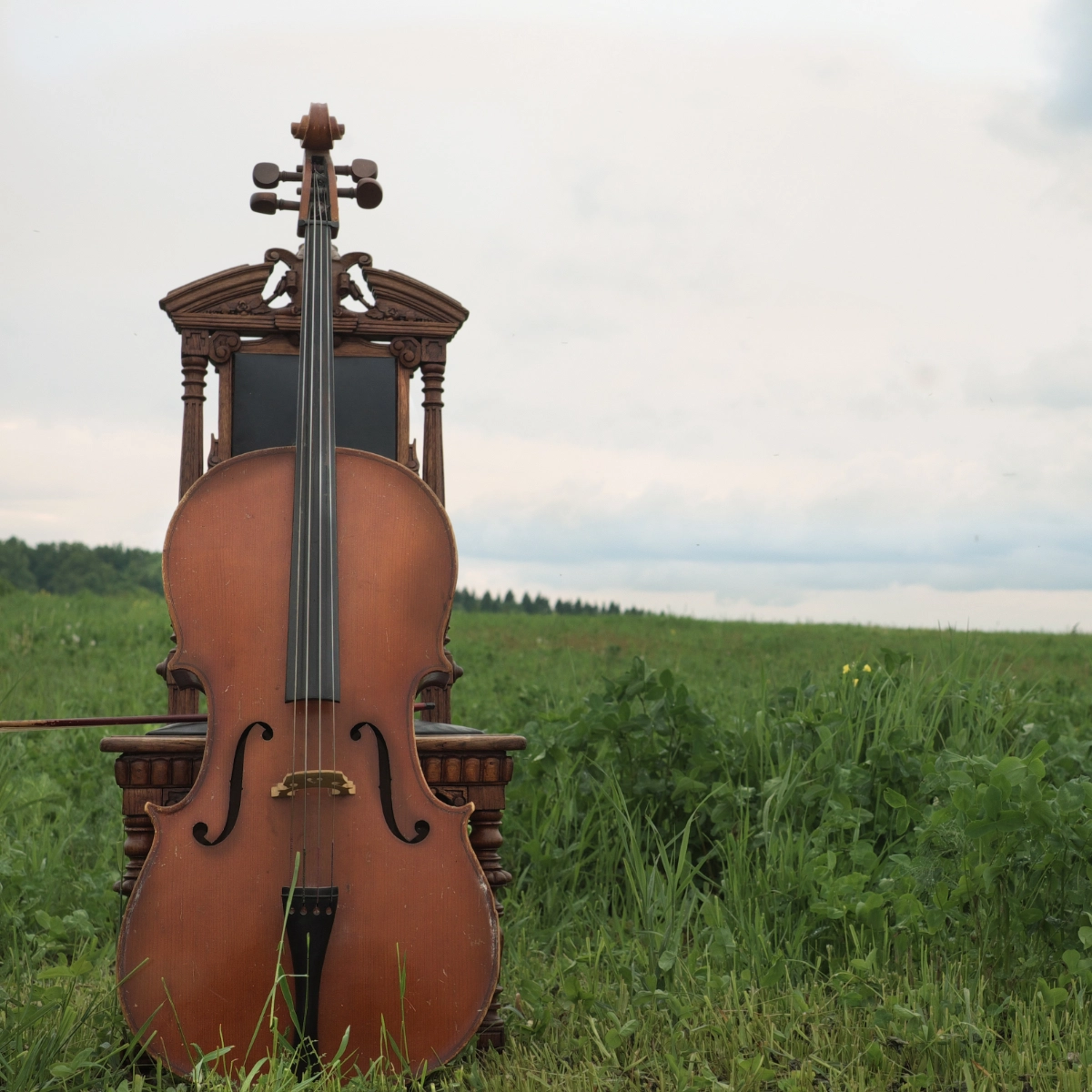
This program is about the ways that external landscapes inspire music and about the ways that music expresses our internal worlds. Leading us through this exploration is the cello, an instrument that has acquired an almost mythical association with humanity and expressivity. Cellist Steven Isserlis writes, “The cello is the most human of instruments. Even physically, one’s relationship to it is somehow similar to a singer’s with his or her voice; the cello seems to become part of one’s body, as one hugs it close and coaxes mellow sound from it.”
We begin with a concerto by Johann Christoph Pepusch, full of operatic scene painting. Pepusch is most famous for composing and arranging the music of the eighteenth-century’s hit musical The Beggar’s Opera, but he was also deeply interested in music history and in performing music of the past, earning a Doctorate in Music from Oxford University. Given his interest in history and his very long career, it is not surprising that the music of this short concerto spans a variety of styles from a Buxtehude-like first movement recalling his early career in northern Germany; to an exquisite opera-aria-like second movement; a comic, scurrying third movement that sounds like the soundtrack for a cartoon chase scene; and a final movement that would fit well into Handel’s Water Music.
Next on the program is some of the most beloved music for solo cello, movements from Bach’s Cello Suite No. 3. Just as each viewer notices something different when looking out onto the same landscape, Bach’s Cello Suites have collected around themselves myriads of interpretations and have even inspired short story collections. They express the language of the human body through dance music. In the eighteenth century, different dances became associated with different moods and ways of moving, which many music theorists tried to encapsulate in words. One particularly evocative description of the courante comes from the musicologist Jules Écorcheville, who said, “The musical transformations of the courante might be compared to the frolicking of a fish who plunges, disappears, and returns again to the surface of the water.”
“LAND BACH is my response to Bach’s Fifth Prelude for solo cello as an Indigenous composer and cellist,” writes Cris Derksen. Her love of Bach’s music is readily apparent here and her music coaxes us into contemplating the significance of landscapes – inner and outer, of land ownership, and of cultural exchange and appropriation in the context of Canadian history.
Vivaldi’s Concerto for Cello and Bassoon, RV 409 concludes the first half of the program. It is an unusual piece and probably an early one in Vivaldi’s output, in which he explores the newly developing violoncello’s potential as a solo instrument and experiments with some of the techniques he would later use in his Four Seasons concertos. It is hard not to hear this concerto as landscape painting. The opening two movements remind me of the early autumn weather we have been experiencing during the past week. First, cello and bassoon play a lazy, lyrical, summery duo, interrupted by gusty fall winds from the rest of the ensemble. Eventually, the interruptions agitate the soloists, who adopt the blustery character, while the ensemble provides just a few lingering moments of summery ease.
Vivaldi’s Concerto for Flute, RV 428, nicknamed “Il Gardellino” imitates the song of the European goldfinch, including an extended cadenza of birdsong that appears not at the end of the concerto, but right at its beginning. Woven around the movements of this concerto, you will hear Canadian composer Emily Doolittle’s interpretation of the song of the North American hermit thrush. Doolittle engages the sounds of the natural world, both as a composer and as a scientist. If you have a moment, look up her article “Hearken to the Hermit Thrush: A Case Study in Interdisciplinary Listening.” Yes, it is a slightly dense piece of academic writing, but it is full of fascinating details about the compositional artistry of birdsong and about human ways of attending to and interpreting birdsong through history.
The program concludes with Nicola Porpora’s Cello concerto. Porpora was Europe’s leading singing teacher and opera composer, coach to stars like the castrato Farinelli. His career took him from his native Naples; to teaching, like Vivaldi, at one of Venice’s Ospedale; to running an opera company in London in competition with Handel; and finally, to Vienna, where he was one of Haydn’s formative musical influences. Porpora was a master of tailoring melodies to perfectly suit the singers he coached. We do not know much about Porpora’s relationship to the cello, but in this concerto he treats the cello as a fine singer, expressing the internal landscapes of human emotion in a way that is fit for the theatrical stage.
Programme
- Allegro
- Adagio
- Presto
- Allegro
- Courante
- Sarabande
- Bourées I&II
- Adagio
- Allegro
- Allegro
- Allegro
- Larghetto cantabile
- Allegro
- Adagio
- Allegro
- Adagio
- Allegro
Performers
-
Diederik van Dijk is a Dutch-Canadian cellist with a broad range of musical activities and interests who is equally at home on the Baroque and the modern cello. Read more
-
Originally from Nanaimo B.C. cellist Amy Laing earned her Bachelor of Music degree from the HARID Conservatory in Boca Raton Florida, and her Master of Music degree from the Cleveland… Read more
-
Born and raised in Edmonton, Katrina Russell obtained her Bachelor of Music Degree in Performance from The University of Victoria. Read more
-
Finnish-born Soile Stratkauskas moved to Victoria, BC, in 2010 and has since established herself as the leading baroque flutist on the Canadian West Coast. Read more

St. John the Divine Anglican Church
St. John’s is wheelchair accessible through the Garden doors on the north side of the church. Accessible seating can be arranged by emailing [email protected] before noon on the day of the concert.
