Of Gods and Lovers
Cupid’s Arrows Pierce the Heart: Cupid or Eros, as he was called by the Greeks, is the personification of the principle of attraction. He is often depicted as a youth carrying a bow and arrows with which to wound mortals and gods alike. Son of Chaos, the primordial void from which the universe emerged, in this scene he rouses the frigid spirit of Winter itself to feel the warmth of love.
Of Damon and Tricis, the Betrayed Lovers: Damon and Tircis, two shepherd characters from French pastoral literature, have been wounded by Cupids darts. In Rameau’s cantata, both have lost their respective loves, Cloris and Sylvie. What to do? Each reacts differently. Tircis laments and weeps, while Damon, who has already tried mourning the loss of a previous lover (as Purcell relates), chooses to laugh off his present loss, counselling Tircis that lovers are easily replaced.
Of Dido and Aeneas, Separated by Fate and Duty: The character of Dido appears in Greek, Roman, and Phoenician legend. According to Phoenician legend, she was the daughter of the king of Tyre, who fled to Africa after the death of her husband Sychaeus, vowing never to marry again. There, she founded the city of Carthage. The poet Virgil makes her a contemporary of Aeneas, son of Venus and founder of another great city. In Virgil’s narrative, Aeneas is shipwrecked near Carthage, where he and Dido fall passionately in love. But, their love breaks Dido’s vow and incurs Jupiter’s wrath. Jupiter appears to Aeneas, telling him that he must leave to establish the city of Rome. Dido, consumed by grief, takes her own life and her funeral pyre lights the way out of the harbour for Aeneas’ departing ship.
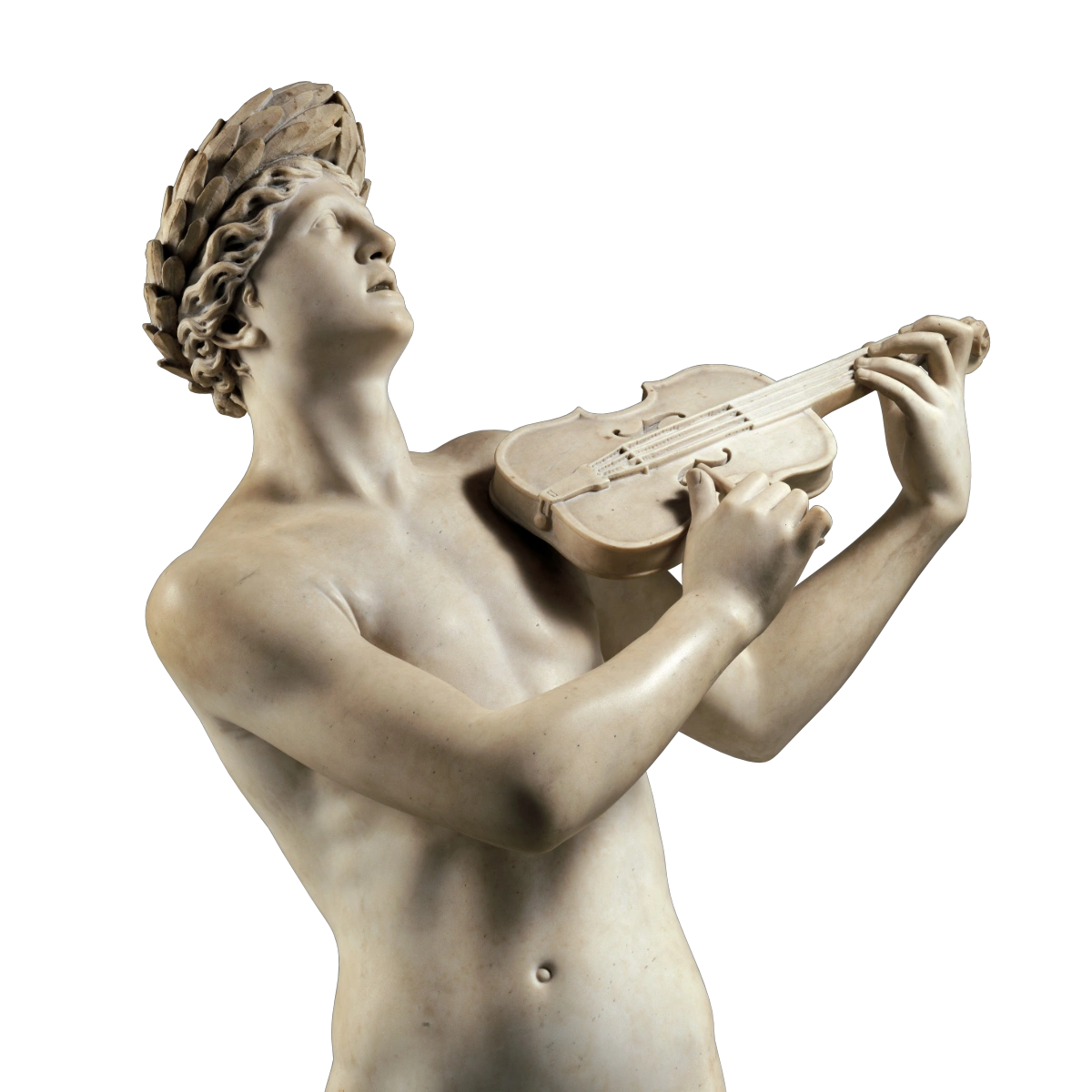
Of Apollo and Daphne and Undesired Love: Apollo was one of the most popular of all Greek gods, the god of prophesy, of the arts, and of agriculture and pastoral life. However, stories of Apollo tell of the two sides of some of his personality traits. He was both a protector and a destroyer, for instance, who, like Cupid, carried a dangerous bow and arrows. He was a generous lover, but also dangerously passionate and tremendously arrogant. One day, meeting Cupid, Apollo mocked him, belittling his bow. Outraged, Cupid shot Apollo, making him fall madly in love in the nymph Daphne, who Cupid had shot with a lead arrow of loathing. When Apollo’s love for the Daphne was unrequited (she had vowed to remain a virgin), he pursued her with seduction, then with threats, and finally by trying to control her physically, but she prayed for rescue and was transformed into a laurel tree. In Greek mythology, Apollo responds by weaving himself a crown of laurel branches, unable to respect Daphne’s desire for freedom. Rameau concludes the story with a warning “How cruel Love is when enraged!”
A Note about Today’s Premiere: Danika Lorèn is a Toronto-based artist. As an acclaimed soprano, they bring their intimate, personal knowledge of the singing voice and of theatre to their compositions. Mine was composed specifically for this program and as a frame for Handel’s Apollo and Dafne. It ingeniously brings together excerpts from Percy Shelley’s poem Hymn of Apollo with the poem Daphne by Edna St. Vincent Millay, which presents Daphne not as the helpless victim of Apollo’s advances, but rather as a powerful figure and the agent of her own transformation.
Programme
- Prelude I
- What ho! Thou genius of this isle
- What power art thou
- Thou doting fool, forbear!
- Great Love, I know thee now
- No part of my dominion shall be waste
- Prelude III
- Écho! Combien de fois ai-je su vous instruire
- Ma bergère a trahi sa foi
- Quoi? Vous riez d’une telle disgrâce ?
- Lorsque malgré son inconstance
- Sont-ce donc là les lois de l’amoureux empire ?
- Quand on perd ce qu’on aime
- Witches’ Dance
- Great minds against themselves conspire
- What shall lost Aeneas do?
- When I am laid in earth
- Che voce! che beltà!
- Ardi, adori
- Che crudel!
- Une guerra ho dentro il seno
- Placati alfin, o cara
- Come rosa in su la spina
- Ah! ch’un Dio non potrebbe
- Come in Ciel benigna stella
- Odi la mia ragion
- Deh, lascia addolcire
- Sempre t’adorerò
- Mie piante correte
Performers
-
A singer deemed “a treasure” by the Toronto Star, Canadian soprano Mireille Asselin enjoys a diverse, international career spanning concert, opera and recital work. Read more
-
Baritone Jesse Blumberg enjoys a busy schedule of opera, concerts, and recitals, performing repertoire from the Renaissance and Baroque to the 20th and 21st centuries. Read more

St. John the Divine Anglican Church
St. John’s is wheelchair accessible through the Garden doors on the north side of the church. Accessible seating can be arranged by emailing [email protected] before noon on the day of the concert.
