Schubert and Boccherini String Quintets
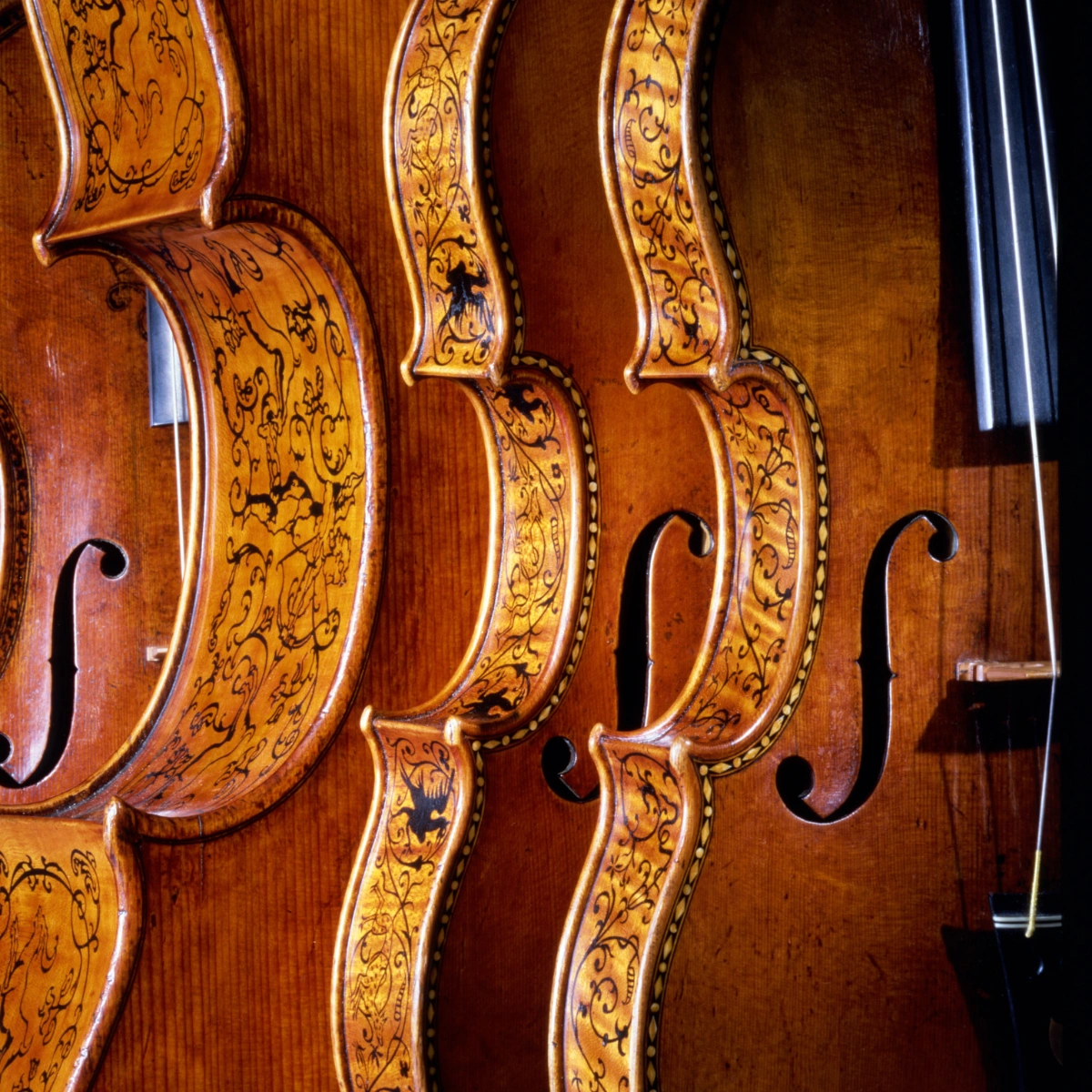
String quintets performed by the Christi and Chloe Meyers, Mieka Michaux, Christina Mahler, and a special guest from Sweden, Mimé Yamahiro.
Luigi Boccherini, String Quintet in G Minor, opus 29, no. 6
“If God wanted to speak to Man through music, He would do so through the works of Haydn; if He wished to listen to music Himself, He would choose Boccherini.“
– Cartier, in his anthology L’Art du violon, 1798
Music in general speaks for itself, but if one has to comment on Boccherini’s music, in what better way than by quoting the above? How can one possibly define the charm of this composer’s music, or attempt to understand what causes us to listen to it for hours on end and be so deeply moved by it?
Over half of Boccherini’s output is made up of string quintets: he wrote well over one hundred. In Madrid, where he lived for the greater part of his life, Boccherini worked a great deal with the Font family, the father and three sons of which had formed a string quartet. With Boccherini playing the first cello part, the quintet apparently achieved an incredibly high standard of perfection. It could well be said that of all composers, Boccherini was the one who wrote best for string instruments.”
These are the words from liner notes written by our beloved Dutch cellist Anner Bylsma. He played much of Boccherini’s works and brought many of his compositions back to the concert stage. Boccherini was born in Italy in 1743 and grew up playing concerts with his father, who played the double bass. This is perhaps the reason that Boccherini developed a new, unique technique using his thumb in order to play in the high register of the cello. He did not invent the “thumb position” but used it in a new way such that the thumb functioned as a capo, increasing flexibility and giving access to the full range of the cello.
Ultimately, Boccherini is a master of superb writing for all string instruments, but especially the cello. He creates an atmosphere both beautiful and moving with colours unique to him.
Franz Schubert, String Quintet in C Major, D. 956 (Op. post. 163)
Composed in the final months of Schubert’s life in 1828, the String Quintet in C Major stands as one of the most profound and beloved works in the chamber music repertoire. The masterpiece was written just two months before his death and remained unpublished until 1853. The first public performance took place in 1850, 22 years after Schubert’s death, at the Musikverein in Vienna, performed by members of the renowned Hellmesberger Quartet, with Josef Stransky as the second cellist. The quintet was only rarely performed, due in part to its unusual instrumentation: two violins, one viola, and two cellos. However, it gradually gained recognition, thanks in part to Johannes Brahms, who deeply admired the work and helped promote Schubert’s legacy through editing and publication.
Unlike the standard quintet formation favored by Mozart and others- two violins, two violas, and one cello- Schubert chose two violins, one viola, and two cellos. This uniquely bottom-heavy instrumentation lends the work extraordinary depth, warmth, resonance, and an expressive range that gives the piece its unmistakable character. This instrumentation was rare in his time, though not entirely unprecedented. The Italian composer Luigi Boccherini, a virtuoso cellist, had written many quintets for this same instrumentation in the late 18th century.
The piece consists of four movements: a majestic “Allegro ma non troppo”, a transcendent “Adagio” in E major, an energetic “Scherzo Presto” with a somewhat mysterious, nostalgic “Trio Andante sostenuto”, and a light spirited, folk-like finale, “Allegretto”. It is particularly notable that the interplay between the two cellos is a defining feature- one often sings with a soaring melodic line while the other anchors the ensemble with resonant depth, creating a balance of lyrical beauty and dramatic contrast. The heart of the piece, to me personally, lies in the second movement, Adagio, which is often described as one of the most beautiful and transcendent slow movements ever written in classical music history. With its serene, almost spiritual quality, it captures something timeless and deeply human, continuing to move audiences nearly two centuries later.
Programme
- Allegro moderato assai
- Minuetto
- Preludio adagio
- Rondo
- Allegro ma non troppo
- Adagio
- Scherzo. Presto – Trio. Andante sostenuto
- Allegretto
Performers
-
An accomplished performer on both modern and baroque violin, Christi Meyers has played a prominent role in the musical life of Victoria for more than 20 years. Read more
-
Violinist Chloe Meyers performs with early music ensembles across North America as leader, orchestra member, and chamber musician. Read more
-
Originally from Victoria, B.C. Mieka Michaux enjoys an active career as an orchestral and chamber musician performing on both modern and baroque viola and violin. Read more
-
Dutch cellist Christina Mahler immigrated to Canada in 1981 to serve as principal cellist of the Tafelmusik Orchestra, a position she held until June of 2019. Read more
-
Mimé Yamahiro Brinkmann is one of the most active freelance cellist/gambist playing both as soloist, and as chamber and orchestra musician in the early music field. Read more

St. John the Divine Anglican Church
St. John’s is wheelchair accessible through the Garden doors on the north side of the church. Accessible seating can be arranged by emailing [email protected] before noon on the day of the concert.
